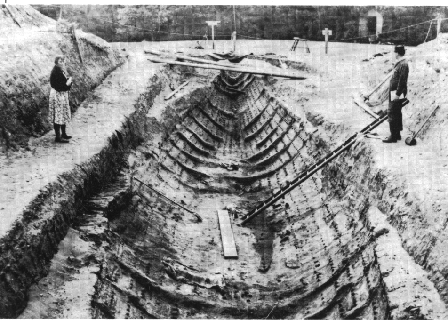
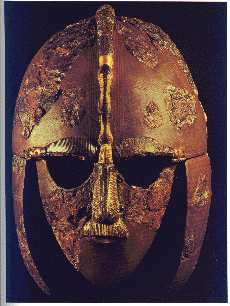
The burial site of Sutton Hoo lies across the River Deben from Woodbridge, an English town. Before the beginning of the excavation of the burial mounds during World War II, the 6th and 7th century sites had been thoroughly raided by scavengers and investigated by the property owners, leaving behind little else but small trinkets to indicate the presence of any significant discovery. Despite the initial lack of results, the dig recommenced at the end of the war, taken over by national experts to continue on into the 1990's. The most important discovery of the site is the 90 ft long, 15 ft wide ship, which is considered one of the most important archaeological discoveries found in England. There are many artifacts found on the burial ship that indicates that the burial itself was for most likely for a king. These artifacts include a scepter topped by a ring and stag pendant, a hearty collection of swords, shields, mail, and a helmet inscribed with scenes of German and Scandinavian mythology. In addition, another mysterious object found at Sutton Hoo is an iron rod presumably part of a standard. The quality of the gold work has led experts to believe that the craftsmen responsible for the work must have been on some type of royal commission. As of this point, no body has been identified in the site, so the burial mounds of Sutton Hoo are most likely a monument honoring someone buried elsewhere. The site itself fits the style of those burials in 'Beowulf,' one of the factors classifying the artifacts in the 6th and 7th centuries.